
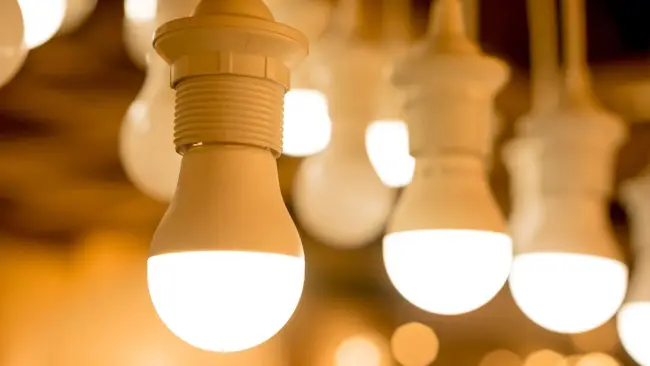
All light bulbs give off heat because of the second law of thermodynamics, which dictates that no energy conversion is 100% efficient. While every bulb emits thermal energy, the intensity varies drastically between technologies, ranging from the high-temperature glow of incandescents to the cool, efficient operation of modern LEDs. Understanding this thermal output is essential for optimizing home safety, reducing energy costs, and selecting the right fixture for your living space.
Regarding the fundamental nature of lighting, heat is a universal byproduct of electrical resistance and light generation. In traditional bulbs, heat is the primary output, whereas in advanced solid-state lighting, it is a minimized secondary effect. Below, we will explore why certain bulbs function more like heaters than light sources and how energy is lost through different physical mechanisms.
Furthermore, the amount of heat produced depends on the grouping of the bulb type, with incandescent and halogen bulbs being the most significant heat emitters compared to energy-saving alternatives. This comparison is vital for homeowners who wish to manage their ambient room temperature and minimize the workload on their air conditioning systems during summer months.
Beyond simple temperature readings, the significance of bulb heat extends to fire prevention and the longevity of your electrical components. Important factors like “luminous efficacy” and “thermal management” determine whether a bulb is a safe choice for enclosed fixtures or a potential hazard. To help you navigate these technical nuances, below is a comprehensive breakdown of the thermal science behind every bulb in your home.
Do All Light Bulbs Give Off Heat?
Yes, all light bulbs give off heat as a fundamental byproduct of energy conversion because of electrical resistance, infrared radiation emission, and the inefficiency of converting electricity into visible light. While technologies like LED are significantly cooler, thermal energy is always present at the source.
To understand why this occurs, we must examine the “Móc xích” connection between electricity and entropy. Specifically, when electrons flow through a medium—whether it is a tungsten filament or a semiconductor—they encounter resistance. Next, we will define the specific physical processes that turn your light fixtures into heat sources.

Why Do Traditional Bulbs Get So Hot?
Traditional bulbs get hot because they rely on incandescence, a process where a tungsten filament is heated to approximately 4,600 degrees Fahrenheit (2,550 Celsius) to produce visible light through thermal radiation. This mechanism is inherently inefficient, as it prioritizes heating over illumination.
In these bulbs, only about 10% of the energy consumed is converted into light that humans can see. The remaining 90% is released as infrared radiation, which we perceive as intense heat. This is a classic example of “Joule Heating,” where the passage of an electric current through a conductor produces thermal energy. According to a study by the U.S. Department of Energy in their Energy Efficiency & Renewable Energy report, traditional incandescent bulbs waste nearly 90% of their energy as heat, making them more akin to small space heaters than efficient lighting tools.
Which Light Bulbs Produce the Most Heat?
There are four main types of light bulbs grouped by heat output: Incandescent, Halogen, CFL, and LED, ranked by their thermal efficiency. Incandescent bulbs produce the most heat, while LEDs are the coolest due to their solid-state design.
Comparing these groups allows us to see the evolution of lighting safety. While the older types rely on heat-generating filaments, newer types use gas excitation or semiconductors. Below, we explore the specific temperature differences between these competing technologies.

Incandescent and Halogen Bulbs with High Heat Output
In the comparison of high-heat lighting, Halogen bulbs win as the hottest offenders because they operate at higher internal pressures and temperatures than standard incandescents to maintain the halogen cycle that protects their filament. Standard incandescents are still extremely hot, but halogens can reach surface temperatures exceeding 1,000 degrees Fahrenheit in high-wattage applications.
- Incandescents: Rely on a simple tungsten filament in a vacuum or inert gas. Most of their energy is lost as infrared heat.
- Halogens: Use a quartz envelope to withstand higher temperatures, allowing the bulb to be smaller and brighter, but significantly more dangerous if touched or placed near flammable materials.
Are LEDs a Cooler Alternative to CFLs?
LEDs are the optimal choice for thermal efficiency because they use a semiconductor to move electrons, whereas CFLs (Compact Fluorescent Lamps) must heat a gas to produce ultraviolet light. LEDs convert roughly 80-90% of energy into light, while CFLs waste about 30% as heat.
While a CFL bulb is much cooler than an incandescent, it still contains a ballast that can become quite warm. LEDs, on the other hand, produce very little “forward heat” (heat in the light beam). Instead, the heat they do produce is managed at the base of the bulb. This makes LEDs the superior technology for maintaining a low ambient temperature in your home.
Why Does Light Bulb Heat Matter for Your Home?
Light bulb heat matters for your home because it impacts fire safety, energy costs, and HVAC efficiency by increasing the thermal load on your living space. Excessive heat from bulbs can damage fixtures, fade nearby fabrics, and increase cooling expenses.
This thermal impact is a critical consideration for both interior design and safety management. If you use high-heat bulbs in enclosed or small spaces, you are effectively fighting your own air conditioner. To understand the deeper risks, let’s look at the science of safety and cost.
The significance of heat emission is most apparent during the summer. In a small room, a single 100W incandescent bulb can raise the temperature by several degrees over a few hours. Furthermore, high-heat bulbs pose a significant risk when used in “enclosed fixtures” where heat cannot escape. Over time, this trapped heat can degrade the bulb’s own lifespan and the wiring of the house itself. According to data from the National Fire Protection Association (NFPA), lighting equipment is a leading cause of structure fires, often due to bulbs being placed too close to combustible materials or the use of higher wattage than a fixture is rated for.
The Science of LED Thermal Management
LED thermal management is the engineered process of removing heat from the semiconductor junction through heat sinks and conduction to ensure the diode does not overheat. Unlike incandescent bulbs that radiate heat away, LEDs must conduct heat through their base.
This distinction is a vital piece of micro-semantics for users who wonder why the bottom of an LED bulb feels hot while the light itself is cool. Specifically, we will look at how the “Heat Sink” component acts as the protector of the bulb’s electronic longevity.
How Heat Sinks Prevent LED Failure
Heat sinks prevent LED failure by conducting thermal energy away from the LED chip and dissipating it into the surrounding air through fins or specialized materials. Because LEDs are sensitive to heat, excessive temperatures at the “junction” will drastically shorten their 50,000-hour lifespan.
- Thermal Conductivity: LEDs use aluminum or ceramic heat sinks because these materials have high thermal conductivity, allowing heat to flow easily.
- Longevity: By keeping the junction temperature low, the heat sink ensures the phosphor and semiconductor materials do not degrade prematurely.
Does Light Bulb Heat Actually Increase Your Electric Bill?
Yes, light bulb heat increases bills by wasting electricity directly and by forcing air conditioning systems to work harder to neutralize the added thermal energy. This “double-cost” effect is a rare attribute of lighting that many homeowners overlook during energy audits.
In warm climates, for every watt of heat generated by a bulb, additional energy is required by the HVAC system to remove that heat. Switching from 100W incandescents to 12W LEDs not only saves 88% on lighting power but also reduces the cooling load on your home. A study by Cornell University’s Department of Design and Environmental Analysis indicates that in commercial buildings, lighting can account for up to 25% of the total cooling load, proving that heat emission is a major economic factor.
Can a 60W Bulb Start a Fire and What It Means for Fire Safety?
A 60W incandescent bulb can start a fire if it comes into direct contact with flammable materials like paper, curtains, or thin plastic, as its surface temperature can reach 200–250 degrees Fahrenheit. This temperature is close to or exceeds the ignition point of some common household items.
Fire safety experts recommend maintaining at least a 12-inch clearance between high-heat bulbs and any combustible materials. In contrast, LEDs rarely exceed 120 degrees Fahrenheit on their hottest surface, making them significantly safer for children’s rooms, closets, and light bulbs give off heat bedside lamps where accidental contact with bedding or toys is a possibility.
Source:
- https://www.doublebayhardware.com.au/cdn/shop/articles/selecting-the-right-colour-temperature-for-your-space-7976616.webp?v=1765695490&width=1024
- https://images.unsplash.com/photo-1520699049698-acd2fccb8cc8?auto=format&fit=crop&q=80&w=1000
- https://baczewskiluxury.com/wp-content/uploads/2022/08/pendant-light-fixtures.jpg
- https://encrypted-tbn0.gstatic.com/images?q=tbn:ANd9GcSlTPiilV0D1dxUySw5wgZv15xmcs961hNT_A&s
- https://i0.wp.com/hirosarts.com/wp-content/uploads/2025/09/LEDs-create-light-via-electroluminescence-with-minimal-heat-produced.jpg?resize=650%2C366&ssl=1
