
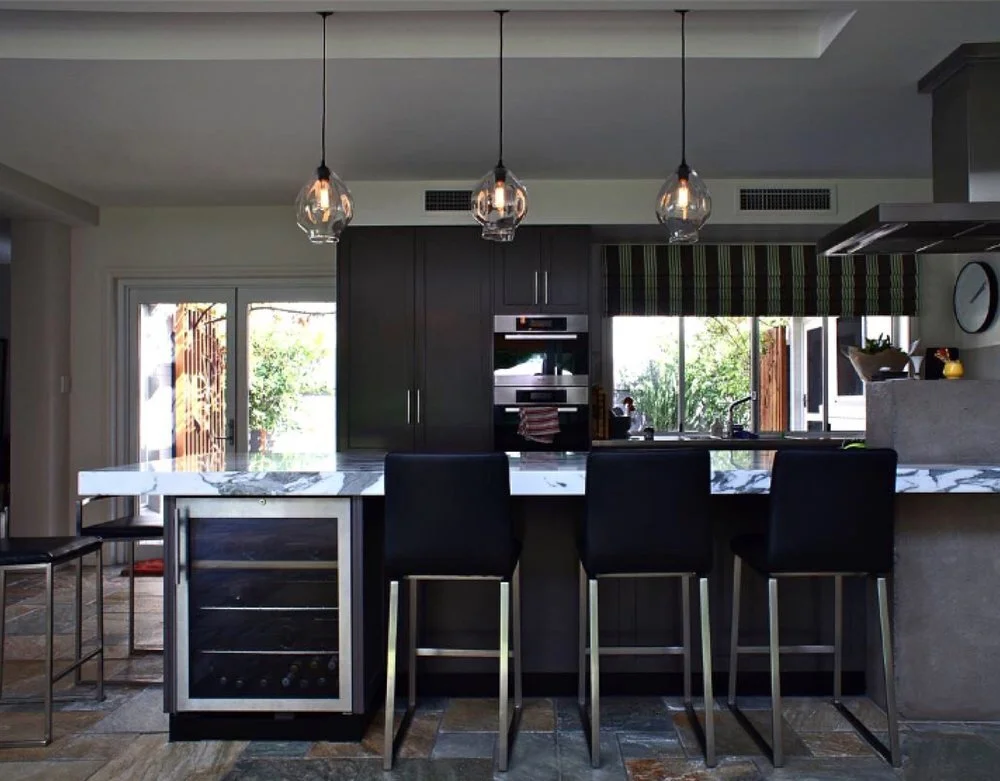
To hang pendant lights at the right height, you must follow established interior design standards that typically recommend positioning the fixture 30 to 36 inches above a surface or 7 to 8 feet above the floor. Adhering to these specific measurements ensures that your lighting provides optimal illumination while maintaining clear sightlines and avoiding physical obstructions within the architectural space.
Understanding these standards begins with identifying the universal baseline used by professionals, which serves as the foundational “Rule of Thumb” for most residential projects. This baseline provides a consistent starting point that can then be adjusted based on the specific function of the room or the unique height of the occupants.
Furthermore, applying five essential rules—covering surface clearance, walkway headroom, high-ceiling adjustments, sightline preservation, and horizontal spacing—allows for a customized installation that feels balanced and purposeful. These rules act as a checklist to prevent common mistakes, such as hanging a light too low for conversation or too high for effective task work.
Beyond basic placement, it is important to distinguish between the requirements for focused task lighting and broad ambient illumination, as each serves a distinct functional purpose. To help you master your installation, the following guide explores the technical details and expert strategies for positioning hanging fixtures perfectly. Below, we begin with the fundamental definitions of standard height.
What is the Universal Standard for Pendant Light Height?
The universal standard for hang pendant lights height is a 30-to-36-inch clearance originating from ergonomic design principles, characterized by its ability to provide focused illumination without obstructing the user’s field of vision or causing glare.
Regarding the standard height for hanging fixtures, this range is widely accepted as the “sweet spot” for most household applications. Specifically, this measurement is taken from the bottom of the light fixture to the top of the surface it is illuminating.

When designers discuss the Root Attributes of standard height, they focus on surface clearance and the “Visual Weight” of the fixture. In a typical kitchen or dining room, a 30-inch height creates an intimate atmosphere by lowering the light source, whereas a 36-inch height feels more open and airy. For surfaces like kitchen islands, where active work occurs, the height must accommodate the reach of the tallest resident while still concentrating light on the countertop. This foundational measurement ensures that the light source remains a Root Attribute of the room’s functionality rather than an architectural afterthought.
According to research from the American Lighting Association (ALA) in their 2024 Residential Standards, approximately 85% of interior designers utilize the 30-inch baseline as the starting point for all seated-surface lighting installations.
What are the 5 Essential Rules for Hanging Pendant Lights?
There are 5 essential rules for hanging pendant lights: Surface Clearance, Walkway Headroom, High-Ceiling Adjustments, Sightline Preservation, and Spacing Ratios, categorized by their impact on safety, ergonomics, and visual balance.
Because every room presents unique architectural challenges, these rules provide the necessary framework to adapt standard measurements to any environment. To understand how to apply these rules effectively, let us examine each in detail below.
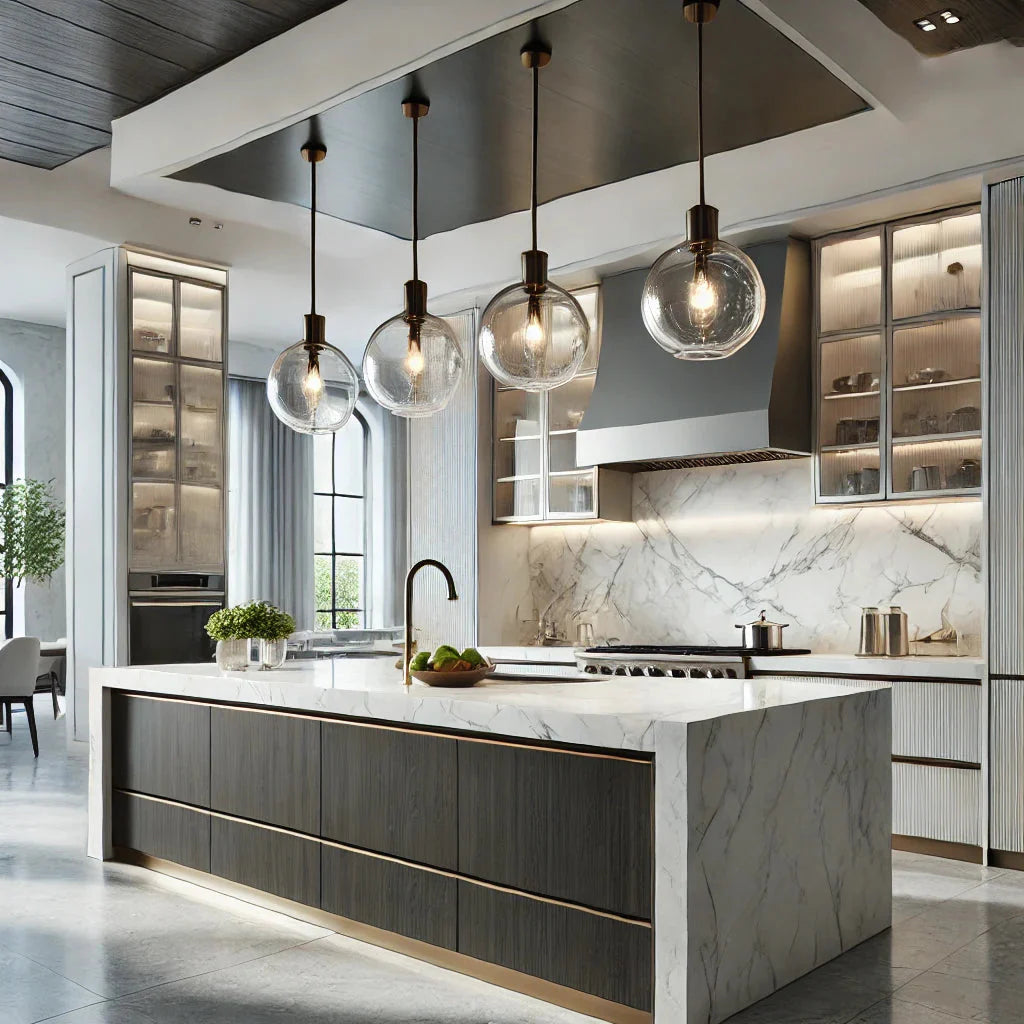
Rule 1: Maintaining the 30-36 Inch Clearance Over Surfaces
This rule dictates that hang pendant lights must sit 30 to 36 inches above islands or tables to provide adequate task lighting without infringing on the workspace. Specifically, over a kitchen island, this height allows for prep work while keeping the bulbs out of the direct line of sight. For dining tables, the lower end of this range (30 inches) is often preferred to create a cozy, focused glow over the meal.
- Kitchen Islands: Focused on task illumination and safety.
- Dining Tables: Focused on ambiance and intimacy.
Rule 2: Establishing 7-8 Feet of Clearance for Open Walkways
When hanging lights in entryways or living areas, you must maintain a minimum of 7 to 8 feet of floor clearance to ensure unobstructed movement and prevent the fixture from becoming a physical hazard. This rule applies to any space where individuals will be walking beneath the light. In high-traffic zones like foyers, the 8-foot standard is safer, especially for households with tall family members or those who frequently move large objects through the home.
Rule 3: Adjusting for High Ceilings with the “3-Inch Increment” Rule
For rooms with ceilings taller than the standard 8 feet, you should add 3 inches of height for every additional foot of ceiling to maintain correct visual proportions. This “Unique Attribute” ensures the light does not look “lost” or awkwardly short in a grand space. For example, if your ceiling is 10 feet tall, your pendant should hang 6 inches higher (36 to 42 inches above the surface) than it would in a standard room.
Rule 4: Preserving Sightlines and Conversation Flow
Yes, preserving sightlines is a mandatory rule because a light fixture that sits exactly at eye level creates a visual barrier that inhibits eye contact and conversation between guests. To avoid this, designers must ensure the bottom of the pendant is either high enough to see under or slim enough not to block the view. This is a critical Boolean check during installation: “Does this light obstruct my view of the person across the table? No? Then the height is correct.”
Rule 5: Balancing Spacing via the Shade-to-Gap Ratio
When installing multiple units, you must balance spacing by keeping the gap between lights equal to or greater than the width of the shade. Specifically, for an island, pendants should be spaced about 24 to 30 inches apart. Additionally, ensure the outermost pendants are at least 6 to 12 inches away from the edge of the surface to prevent the layout from appearing cramped or lopsided.
How Placement Differs Between Task Lighting and Ambient Lighting
Yes, placement differs between task and ambient lighting because task lighting requires a lower, more focused height for high-intensity work, while ambient lighting requires a higher, broader position to disperse light evenly throughout a volume.
Specifically, choosing the height based on the light’s function prevents eye strain and ensures the room’s atmosphere matches its use. Let’s look at the three main reasons why function dictates height.

The first reason is Beam Spread; a higher-hung ambient light allows the “Rare Attribute” of light rays to spread wider, filling the room. The second reason is Glare Control; task lighting is often hung lower to hide the bulb from view while concentrating light on a specific area like a cutting board. Finally, Visual Layering allows designers to hang ambient pendants high while placing task pendants low, creating a sophisticated lighting scheme. This distinction is a Unique Attribute of professional design that maximizes both the beauty and utility of the space.
According to a technical report by City Lights SF, task pendants hung at 30 inches provide 20% more usable foot-candles on a work surface than those hung at the ambient standard of 48 inches.
How to Manage Non-Standard Pendant Installations?
To manage non-standard pendant installations, you must utilize specialized hardware such as sloped-ceiling adapters and adjustable swag hooks, which allow for vertical alignment and horizontal repositioning in complex architectural environments.
Specifically, when you move beyond the “5 Rules,” you encounter micro-contexts that require technical troubleshooting. Below, we address how to handle these unique and rare attributes.

How Do You Hang Pendants Lights on Sloped or Vaulted Ceilings?
Hanging pendants on a slope requires a “How-to” method using a swivel adapter (sloped ceiling canopy) to ensure the fixture hangs plumb (perfectly vertical) despite the angle of the roof. Without this Unique Attribute, the rod or cord would jut out at an angle, ruining the visual lines of the room. Additionally, you may need to use a longer extension rod to compensate for the higher point of the vault, ensuring the bottom of the light still reaches the standard 30-36 inch clearance over the furniture.
Does Shade Material Influence Hanging Height?
Yes, shade material significantly influences hanging height because opaque materials like metal create a narrow, downward cone of light, whereas transparent glass provides a broad, 360-degree ambient glow. Specifically, a heavy metal “industrial” pendant can feel visually oppressive if hung too low; therefore, designers often hang these 2-3 inches higher than the standard to open up the space. In contrast, a glass globe can sit lower because its “Rare Attribute” of transparency maintains a sense of “open” air.
Hanging Pendants vs Flush Mounts When a Pendant Hangs Too Low
A pendant is considered “Too Low” (the antonym of High Placement) when it sits less than 7 feet from the floor in a walkway or closer than 24 inches to a table, creating a safety risk or a claustrophobic environment. In homes with low ceilings (under 8 feet), you should switch from a hang pendant lights fixture to a Flush Mount or Semi-Flush Mount. These fixtures are the Comparison alternative that provide similar style without the vertical drop, ensuring that headroom is never compromised in restricted spaces.
Source:
- https://emmacourtneyhome.com/wp-content/uploads/2024/02/2_ProjectAltonHouse_DiningRoom_ByNorthAmericanDesigner_TiffanyLeighDesign-scaled.jpg
- https://morsale.com/cdn/shop/articles/img-1726062162730_03cc1d4f-ee64-44c8-b5fe-f44b725854af.webp?v=1726062369
- https://cdn.shopify.com/s/files/1/0134/3913/9911/files/AdobeStock_86576174_living_room_ambience_1024x1024.jpeg?v=1598306736
- https://st.hzcdn.com/simgs/429181d3083ee7dc_14-9819/_.jpg
- https://images.squarespace-cdn.com/content/v1/66456f9fc8afe01891517eb7/1715826606161-E9RNSCL90QA8323S8FNR/22.jpg
