

Fix off-center kitchen island pendant lights requires a strategic blend of structural relocation and creative design adjustments to restore visual balance to your kitchen island. Whether you choose to physically move the electrical junction box or use non-invasive methods like swagging, the goal is to align the illumination with your workspace’s midline. Specifically, homeowners can achieve a perfectly centered look by utilizing hardware solutions or embracing intentional asymmetry that complements the room’s architecture.
To begin, understanding the grouping of available methods is essential, ranging from simple decorative hooks to complex rewiring. Methods like using a swag hook or an oversized ceiling medallion provide immediate aesthetic relief without the need for intensive drywall repair. These “quick fixes” allow for the repositioning of light fixtures while maintaining the integrity of your existing ceiling structure.
Alternatively, a comparison between permanent structural changes and lighting additions reveals distinct advantages for different renovation budgets. Relocating a junction box offers the most seamless professional finish, whereas adding a third pendant light can effectively “mask” an off-center outlet by creating a new symmetrical field. Each approach carries specific technical requirements regarding joist placement and electrical safety standards.
Finally, achieving professional-grade alignment involves specialized tools and an understanding of modern design boundaries, such as the use of laser levelers and linear chandeliers. Following these expert steps ensures that your kitchen lighting is not only functional but also architecturally harmonious. Below, we provide an in-depth exploration of every technique to help you correct misaligned island pendants once and for all.

What Does “Off-Center” Pendant Lighting Mean for Your Kitchen?
Off-center pendant lighting is a structural misalignment where the ceiling junction box sits outside the vertical midline of the kitchen island, resulting in skewed illumination and visual imbalance. It typically occurs due to measuring errors during construction or shifting island placements during renovations.
Regarding the definition mentioned above, the issue of “off-center” lighting is rarely just a cosmetic flaw; it fundamentally disrupts the “visual weight” of the kitchen. Specifically, when a light fixture does not align with the center of the island, it creates a sense of instability that draws the eye toward the error rather than the kitchen’s focal points. Important more, this misalignment often results in uneven task lighting, casting unwanted shadows over food preparation areas and reducing the functional efficiency of the space.
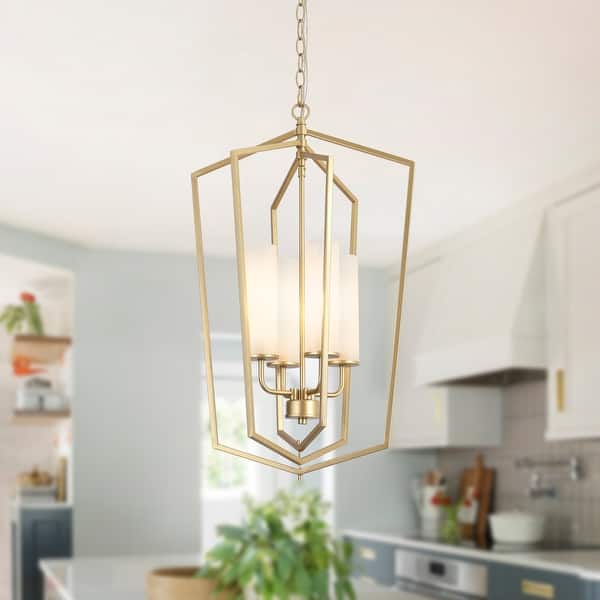
What are the most effective methods to fix off-center kitchen island pendant lights?
There are four primary methods to fix off-center kitchen island pendant lights: using a swag hook, installing a larger canopy/medallion, adding additional fixtures to balance the layout, or physically relocating the junction box for a permanent solution.
Moc xích (linking) these grouping options together, homeowners must decide between the ease of installation and the cleanliness of the final look. To help you navigate these choices, we have broken down the most popular non-invasive techniques below.
Is Using a Swag Hook the Fastest Way to Move a Light?
Yes, using a swag hook is the fastest non-invasive method because it requires no rewiring, uses existing cord length, and can be installed in under fifteen minutes with basic household tools. This technique effectively “pulls” the light toward the desired center point.
Specifically, the swag hook method relies on the flexibility of the pendant’s cord or chain. By mounting a decorative hook into a ceiling anchor at the correct center point, you can loop the cord through it, allowing the light to hang exactly where you want it. However, it is important to note that this creates a visible “drape” in the cord, which suits industrial or farmhouse aesthetics but may clash with ultra-minimalist designs. To ensure safety, always use a toggle bolt for the hook if it is not being screwed directly into a wooden joist.
Can You Use an Extra-Large Canopy or Ceiling Medallion to Hide an Off-Center Box?
Yes, utilizing an extra-large canopy or a ceiling medallion is a viable aesthetic solution that allows you to mask the original off-center hole while shifting the pendant’s exit point slightly toward the center. This covers minor misalignments of 2-5 inches.
Moch chain (linking) back to the problem of visual gaps, a ceiling medallion acts as a decorative plate that sits between the fixture and the ceiling. By choosing a wide-diameter medallion, you can effectively hide the fact that the junction box isn’t perfectly centered. Furthermore, some specialized “offset” canopies are designed specifically for this purpose, featuring a wide base that allows the cord to exit from a different position than the electrical connection, providing a cleaner look than a swag hook.

Choosing Between Moving the Junction Box and Adding More Fixtures
Relocating the junction box wins for architectural perfection, whereas adding more fixtures is better for visual balance and increasing total light output without the need for extensive drywall patching or repainting.
When comparing these two major strategies, the decision often rests on the homeowner’s long-term goals for the kitchen. Let’s explore the specific scenarios where each choice excels.
When Should You Relocate the Electrical Junction Box?
You should relocate the junction box when structural perfection is required, usually during a full renovation or when the ceiling is accessible via an attic, ensuring a clean, “no-cord” look that maintains the home’s resale value.
Specifically, this process involves an electrician cutting a new hole at the center point, pulling the existing wires to the new location, and securing a new box to a joist or brace. While this is the most “correct” fix, it necessitates patching the old hole with drywall compound, sanding, and repainting the entire ceiling section. According to a 2023 cost analysis by HomeAdvisor, hiring a professional electrician for junction box relocation typically ranges from $150 to $350, excluding the cost of ceiling repair.
How Does Adding a Third Light Create the Illusion of Symmetry?
Adding a third light creates symmetry by re-centering the visual field; by placing two new lights at equal distances from the off-center original, you create a balanced “three-point” arrangement that ignores the island’s midline.
In practice, this method uses the “Rule of Three” in interior design. If you have one light that is 6 inches to the left of the center, adding two more lights—one further left and one to the right—re-establishes a rhythmic pattern. This makes the off-center nature of the original box irrelevant because the eye perceives the group as a single, balanced unit. This is particularly effective for large islands where more light is functionally beneficial anyway.

How to Achieve Professional-Grade Alignment and Design Harmony?
Professional alignment involves utilizing laser leveling, mapping structural joists, and selecting adaptable fixtures like linear chandeliers to ensure that light placement is perfectly parallel to the island’s edges and cabinetry lines.
Beyond simple fixes, achieving a high-end look requires attention to detail that goes past the human eye’s estimation. Next, we look at the specialized tools and modern concepts used by pro-designers.
Can Laser Levelers Ensure Perfect Parallel Alignment?
Yes, laser levelers ensure 100% precision by projecting a perfectly straight line from the island’s floor-center up to the ceiling, eliminating the human error associated with tape measures and visual “eyeballing” in large open-plan kitchens.
To use this effectively, an electrician places a self-leveling cross-line laser on the island’s surface. The vertical beam indicates exactly where the ceiling box must sit to be perpendicular to the island’s edges. This is crucial because even a 1/2-inch deviation is noticeable when hanging long-stemmed pendants. Specifically, the use of a 360-degree laser can also help align the pendants with other kitchen elements, such as the sink or the range hood, ensuring whole-room harmony.
Is Intentional Asymmetry a Viable Modern Design Choice?
Yes, intentional asymmetry is a valid design choice when the pendants are aligned with a different focal point, such as a prep sink or a specific cooking zone, rather than the geometric center of the island slab.
Conversely, some modern designers reject the need for centering altogether. By grouping two pendants at one end of a long island, you create a “zone” for dining, leaving the other half of the island open for prep work. This makes the off-center lighting look like a deliberate lifestyle choice rather than a mistake. According to the Illuminating Engineering Society (IES) standards for residential kitchens, task-oriented lighting placement is often more efficient than purely symmetrical placement for reducing user eye strain during intricate tasks.
What Should You Do if a Ceiling Joist Blocks Your Perfect Center Point?
If a joist blocks the center, you should use a “pancake” box or a sliding bracket system which allows the electrical box to sit flush against the joist or span the gap between two beams, ensuring the light hangs in the correct spot.
Important more, structural obstructions are the most common reason junction boxes are off-center in the first place. If you find a joist exactly where the center should be, you cannot simply move the box. Instead, a pancake box—which is only 1/2 inch deep—can be screwed directly into the face of the joist. The drywall is then cut around it, allowing the light to hang exactly on center without needing to cut into the structural timber of the house.
How Does a Linear Chandelier Solve the “One-Box” Problem?
A linear chandelier solves the problem by connecting multiple bulbs to a single off-center canopy, using a long horizontal frame to distribute light evenly across the island regardless of where the junction box is located.
Specifically, a linear chandelier features a long bar that can be several feet wide. Because the bar is rigid, it only needs one power source. Even if your electrical box is 10 inches off-center, you can mount the chandelier’s base so that the long bar is centered over the island. The “arm” of the fixture masks the distance between the box and the center, providing a sophisticated, high-end look with minimal electrical work.

In summary, fix off-center kitchen island pendant lights is a versatile process that depends on your technical skill, budget, and the structural limitations of your ceiling. Whether you opt for a quick swag hook adjustment or a permanent junction box relocation, achieving symmetry is always possible.
Source:
- https://images.unsplash.com/photo-1556912172-45b7abe8b7e1
- https://ak1.ostkcdn.com/images/products/is/images/direct/3a35b1c9dfbc10e5dd0c4f3ecafde21cca77f0d0/Modern-Gold-4-Light-Lantern-Chandelier-Geometric-Glass-Pendant-Light-Fixture-for-Kitchen-Dining-Room.jpg?impolicy=medium
- https://images.unsplash.com/photo-1513519245088-0e12902e5a38
- https://images.unsplash.com/photo-1560448204-61dc36dc98c8
- https://niche.scene7.com/is/image/NicheDesign/5-Pendant-Lights-Over-Kitchen-Island?$Blog%20Image$
