
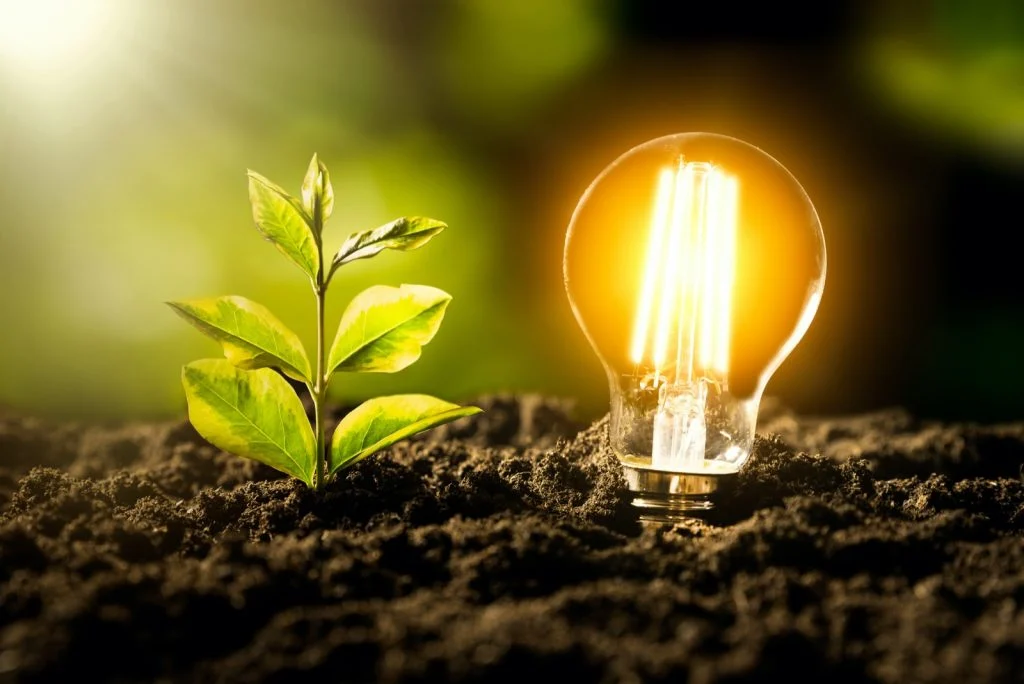
Do regular light bulbs help plants grow indoors? Yes, regular light bulbs can help plants grow by providing the necessary electromagnetic radiation required for photosynthesis, provided they are the correct type, such as high-lumen LEDs or CFLs. Using these common household fixtures is an effective way to maintain indoor greenery on a budget because they emit light within the visible spectrum that plants use to synthesize food.
Certain types of standard bulbs are significantly more effective than others, with Daylight LEDs (5000K-6000K) being the gold standard for vegetative health. These bulbs offer a cost-efficient alternative to professional systems, allowing hobbyists to sustain low-to-medium light plants without specialized equipment.
To achieve success, the setup requires precise positioning, usually between 6 to 12 inches from the foliage, to compensate for the lower intensity compared to the sun. Maintaining a consistent light duration is essential for mimicking natural diurnal cycles and ensuring the plant receives enough energy over time.
While these bulbs are excellent for maintenance, they do have limitations regarding flowering and fruiting compared to full-spectrum grow lights. Below, we provide a comprehensive guide on how to maximize the potential of household lighting for your indoor jungle.
:max_bytes(150000):strip_icc()/spr-grow-lights-test-aero-garden-trio-rachel-marek-00039_crop-71805df37cf14d3ead0efecda1025dee.jpeg)
Do Regular Light Bulbs Help Plants Grow Indoors?
Yes, regular household light bulbs help plants grow because they emit wavelengths of light that trigger photosynthesis, specifically when using LED or fluorescent technology, maintaining adequate brightness, and ensuring close proximity to the leaves. Standard bulbs are capable of sustaining plant life because chlorophyll – the pigment responsible for energy production – absorbs light primarily in the blue and red ends of the spectrum, both of which are present in modern household “daylight” bulbs.
Regarding the efficacy of these lights, we must look at how they interact with plant biology. While a standard bulb isn’t “optimized” for plants, it still emits photons that the plant can harvest. Specifically, for low-light species like Pothos, Snake Plants, or ZZ Plants, a regular LED bulb provides more than enough energy to prevent dormancy or death in dark corners.
According to a study by the University of Florida’s Institute of Food and Agricultural Sciences (IFAS) in 2021, researchers found that while specialized grow lights are superior for biomass production, standard cool-white LEDs can successfully maintain the aesthetic quality of indoor foliage plants for extended periods.
Which Types of Standard Bulbs Are Best for Indoor Plants?
There are three main types of household bulbs available: LEDs, Compact Fluorescents (CFLs), and Incandescents, which are categorized based on their energy efficiency, heat output, and spectral quality. Choosing the right category is vital because not all “light” is created equal in the eyes of a plant.
In the context of indoor gardening, the hierarchy of choice is clear. LEDs lead the group due to their longevity and “cool” operating temperature, followed by CFLs, which are efficient but contain trace amounts of mercury. Incandescent bulbs are the least desirable group because they convert 90% of their energy into heat rather than light, which can scorch leaves and provide very little of the blue spectrum needed for growth.

Why Are Daylight LED Bulbs (5000K-6000K) the Most Effective?
Daylight LED bulbs are high-efficiency light sources that operate within the 5000K to 6000K color temperature range to simulate the crisp, blue-heavy spectrum of natural noon sunlight. This specific Kelvin rating is crucial for plants because blue light is the primary driver of vegetative growth, keeping stems strong and leaves vibrant.
- Spectrum: Concentrated in the 450nm (blue) range.
- Energy Use: Extremely low wattage for high output.
- Durability: Lasts up to 25,000 hours.
How Many Lumens Do Your Regular Bulbs Need to Support Growth?
Lumens are a measurement of visible light intensity that determines the total amount of light emitted from a source, with a minimum of 1,000 lumens required for most indoor maintenance tasks. While lumens measure light for human eyes, high-lumen bulbs generally provide enough photon density to satisfy the minimum requirements for photosynthesis in medium-light plants.
To illustrate, a standard 60-watt equivalent LED bulb typically produces about 800 lumens. For better results, shifting to a 100-watt equivalent (approximately 1,500 to 1,600 lumens) provides a much safer margin for plant health.
How to Set Up Regular Bulbs for Optimal Plant Maintenance?
The proper setup method involves selecting a high-lumen daylight LED, positioning the bulb within 12 inches of the foliage, and utilizing a timer to ensure a consistent 14-to-16-hour light cycle. This instructional approach ensures that the lack of professional-grade intensity is compensated for by duration and proximity.
Furthermore, positioning is the “make or break” factor when using non-specialized bulbs. Because the intensity of light drops off exponentially as distance increases – a physics principle known as the Inverse Square Law – a bulb placed three feet away is only 1/9th as intense as one placed one foot away.
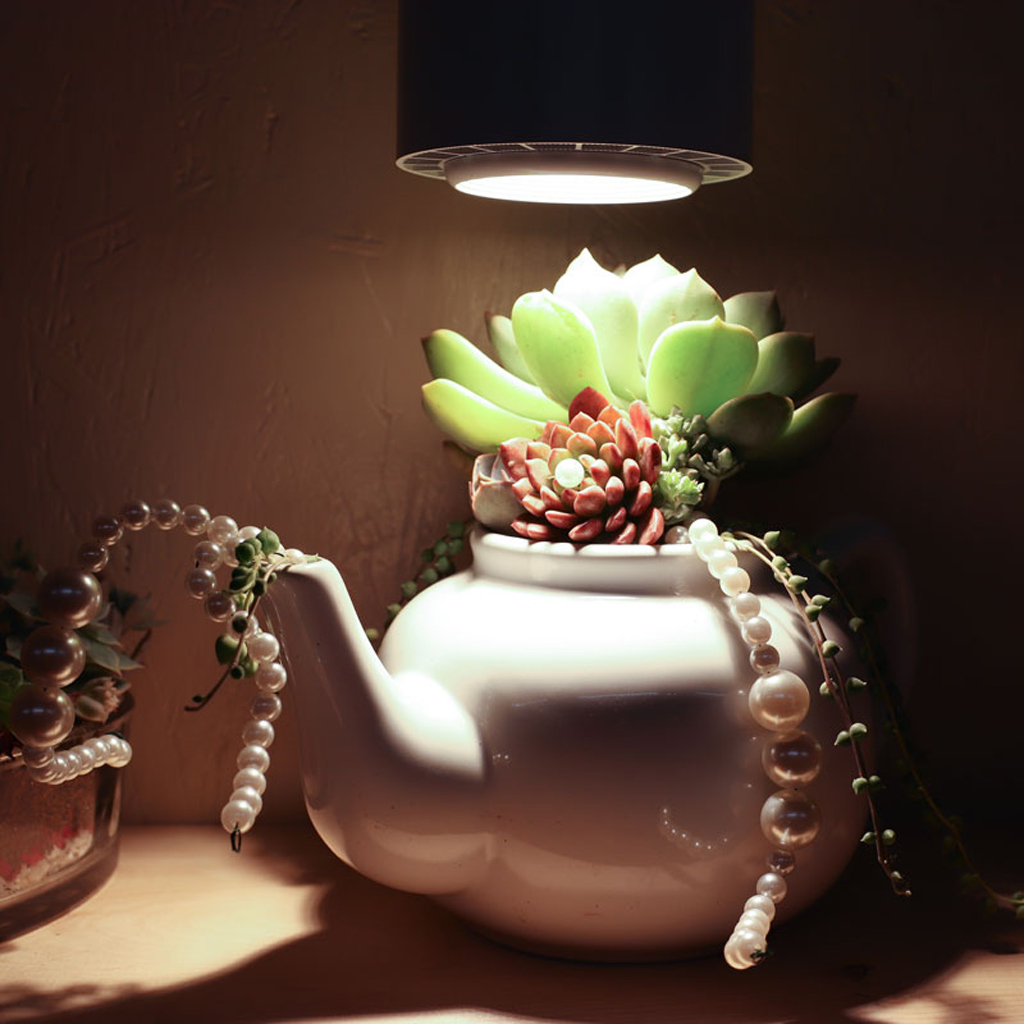
What Is the Ideal Distance Between the Bulb and Foliage?
The ideal distance is the spatial gap between 6 and 12 inches that balances the need for high light intensity with the necessity of avoiding localized heat buildup. Keeping the light within this “sweet spot” ensures that even a standard household bulb can deliver enough energy to the chloroplasts located in the upper leaf surfaces.
If you move the bulb closer than 6 inches, you risk “light bleach” or drying out the leaves, even with cool LEDs. Conversely, moving beyond 12 inches often renders a regular bulb ineffective for anything other than the lowest-light species like ferns.
Choosing Between Regular Bulbs and Specialized Grow Lights
Regular bulbs win on cost-effectiveness and availability for casual maintenance, while specialized grow lights are superior in spectral precision, PAR output, and the ability to drive reproductive stages like flowering and fruiting. This comparison highlights that while household bulbs are “good enough” for survival, they are rarely “optimal” for maximum production.
Specifically, specialized grow lights are engineered to emit high amounts of “Red” light (660nm), which triggers the hormones responsible for blooming. Regular “Daylight” bulbs are often deficient in this specific red peak.
According to data from Horticulture Lighting Group (HLG), specialized LEDs can provide up to 3x more Photosynthetic Photon Efficacy (PPE) per watt compared to standard off-the-shelf household LEDs.
What Are the Limitations of Using Non-Specialized Lighting?
The limitations of standard bulbs include a restricted light spectrum, lower light density (PPFD), and an inability to support high-energy biological processes such as large-scale vegetable production or blooming. These micro-semantic constraints mean that while your Ficus may stay green, your indoor tomato plant will likely struggle to produce fruit.
In addition to spectral gaps, regular bulbs lack the beam angle control of specialized lamps. Grow lights often use lenses to focus light downward, whereas household bulbs are designed to scatter light in all directions to illuminate a room, resulting in a significant loss of energy that never reaches the plant.
:strip_icc()/GettyImages-2159908549-ff1f8d9ce9ca40318f1c9d802c27f5be.jpg)
Why Do Plants Become “Leggy” Under Standard Household Bulbs?
Etiolation is the biological process characterized by weak, elongated stems and pale leaves that occurs when a plant stretches toward a light source that lacks sufficient intensity. This rare attribute of plant behavior is an emergency survival mechanism, as the plant spends all its energy on height to “find” the sun, rather than developing strong structural roots or thick leaves.
If you notice your plant stretching significantly between its leaf nodes (the “leggy” look), it is a clear sign that your regular bulb is either too far away or has too few lumens to satisfy the plant’s metabolic needs.
What Is PAR and Why Does It Matter for Indoor Gardening?
PAR, or Photosynthetically Active Radiation, is the range of light wavelengths from 400 to 700 nanometers that plants specifically use for the process of photosynthesis. Unlike lumens, which measure how bright a light looks to a human, PAR measures the photons that actually “work” for the plant.
Most regular light bulbs are designed to look “pleasant” to humans, which often means they peak in the green/yellow part of the spectrum. Plants, however, reflect green light (which is why they look green) and utilize the red and blue ends. Therefore, a bulb can look very bright to you (high lumens) but be “dim” to the plant (low PAR).
Can Regular Bulbs Cause Heat Stress or Leaf Scorch?
Yes, regular bulbs can cause heat stress if they are incandescent or halogen types, whereas modern LEDs are much safer and rarely cause thermal damage to leaf tissues. This distinction is critical for the “móc xích” between bulb selection and plant safety.
If you use an old-fashioned 60W incandescent bulb, the surface temperature can exceed 200°F. If this bulb is placed at the recommended 6-inch distance for intensity, it will effectively “cook” the plant. Conversely, an LED bulb remains relatively cool, allowing it to be placed much closer to the foliage without risk.
In conclusion, do regular light bulbs help plants – specifically high-lumen, daylight LEDs – are a viable and effective tool for indoor gardening maintenance. By keeping them close to your plants and running them for long durations, you can maintain a lush, green indoor environment without the expense of professional agricultural lighting.
Source:
- https://www.thespruce.com/thmb/FHAURYQ1LMGkXX8ATO9x753PDTc=/1500×0/filters:no_upscale():max_bytes(150000):strip_icc()/spr-grow-lights-test-aero-garden-trio-rachel-marek-00039_crop-71805df37cf14d3ead0efecda1025dee.jpeg
- https://cdn.shopify.com/s/files/1/0150/6262/files/348dcd165d608ec200aef561801ab8dd6d71f0e8-2870×3827.webp?v=1727188986
- https://mountaincrestgardens.com/product_images/uploaded_images/soltech-teapot3.jpg
- https://www.bhg.com/thmb/065-6LsQYk_FuSh6RGEN_IuIISw=/3703×0/filters:no_upscale():strip_icc()/GettyImages-2159908549-ff1f8d9ce9ca40318f1c9d802c27f5be.jpg
- https://www.color-meanings.com/wp-content/uploads/growing-plant-yellow-colored-light-bulb-1024×684.jpeg
