
Discovering the benefits of compact fluorescent light bulbs (CFLs) allows homeowners and businesses to transition from outdated, high-energy lighting to modern, sustainable solutions. By adopting this technology, consumers can achieve a delicate balance between high-quality illumination and significantly reduced utility costs.
What Are Compact Fluorescent Light Bulbs (CFLs)?
A Compact Fluorescent Light Bulb (CFL) is a type of gas-discharge lamp that uses electricity to excite mercury vapor, creating ultraviolet light that causes a phosphor coating to glow with visible light inside a compact glass tube.
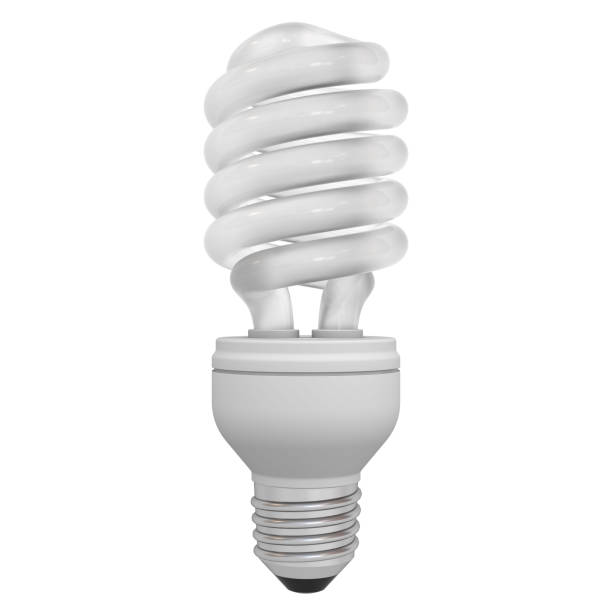
To understand the fundamental nature of these bulbs, we must look at how they bridge the gap between industrial fluorescent tubes and domestic lighting needs. Unlike the long tubes found in offices, compact fluorescent light bulbs are “compact” because the glass tubing is folded or twisted into a spiral, allowing the entity to occupy the same physical footprint as a standard bulb. This design choice was intentional, ensuring that the technology could be adopted without requiring consumers to replace their existing lamps or ceiling fixtures.
Specifically, the base of a CFL contains an integrated electronic ballast. This component is crucial because it manages the high voltage needed to start the lamp and then regulates the current once the mercury vapor is ionized. According to data from the U.S. Department of Energy (DOE) in 2023, the integration of the ballast into the bulb base was the primary factor that allowed fluorescent technology to move into the residential “screw-in” market.
Are CFL Bulbs Truly More Energy-Efficient Than Incandescents?
Yes, CFL bulbs are significantly more energy-efficient because they consume 75% less power, produce far less waste heat, and utilize advanced phosphor conversion to maximize light output per watt of electricity used.

Regarding the question of efficiency, the mechanical difference in how these bulbs operate is the key reason for their success. Traditional incandescent bulbs work by heating a tungsten filament until it glows, a process where 90% of the energy is wasted as heat. In contrast, CFLs do not rely on heat; they rely on the excitation of gases. This allows a 13-watt CFL to produce the same 800 lumens of light as a 60-watt incandescent bulb, effectively cutting energy waste at the source.
Moreover, the thermal efficiency of CFLs keeps indoor environments cooler, reducing the load on air conditioning systems during summer months. Based on a report by ENERGY STAR, if every American home replaced just one light bulb with a CFL, it would save enough energy to light 3 million homes for a year while preventing greenhouse gas emissions equivalent to those of 800,000 cars.
What Are the Primary Benefits of Switching to CFLs?
There are three primary benefits of switching to CFLs: extreme durability, significant reduction in carbon footprints, and substantial long-term financial savings for the end-user.
To understand these benefits in detail, we must categorize them into practical applications that affect both the planet and your wallet. After following, let’s break down these advantages into specific categories:
Long-Term Durability
CFLs are engineered to last significantly longer than their predecessors. While a standard incandescent bulb typically burns out after 750 to 1,000 hours of use, a high-quality CFL is rated for 6,000 to 15,000 hours. This means that in a typical household setting, you might not need to change a single bulb for over five years, drastically reducing the frequency of maintenance and the accumulation of waste.
Environmental Impact
The environmental benefit of compact fluorescent light bulbs is found in the “avoided emissions” they create. Because they require less power from the electrical grid—which is often powered by coal or gas—the total carbon dioxide output associated with lighting your home is slashed by 75%. This reduction in demand helps mitigate the acceleration of climate change at a granular, household level.
Financial Savings
Although the initial purchase price of a CFL is higher than an incandescent bulb, the return on investment is undeniable. Over the lifespan of a single CFL bulb, a consumer can expect to save between $30 and $50 in electricity costs. When multiplied by every socket in a home, the total savings can reach hundreds of dollars annually.
How Do CFLs Compare to Traditional Incandescent Bulbs?
CFLs win significantly in efficiency and lifespan, while incandescent bulbs offer a lower initial purchase price, instant-on brightness, and a warmer aesthetic that some users prefer for specific interior designs.
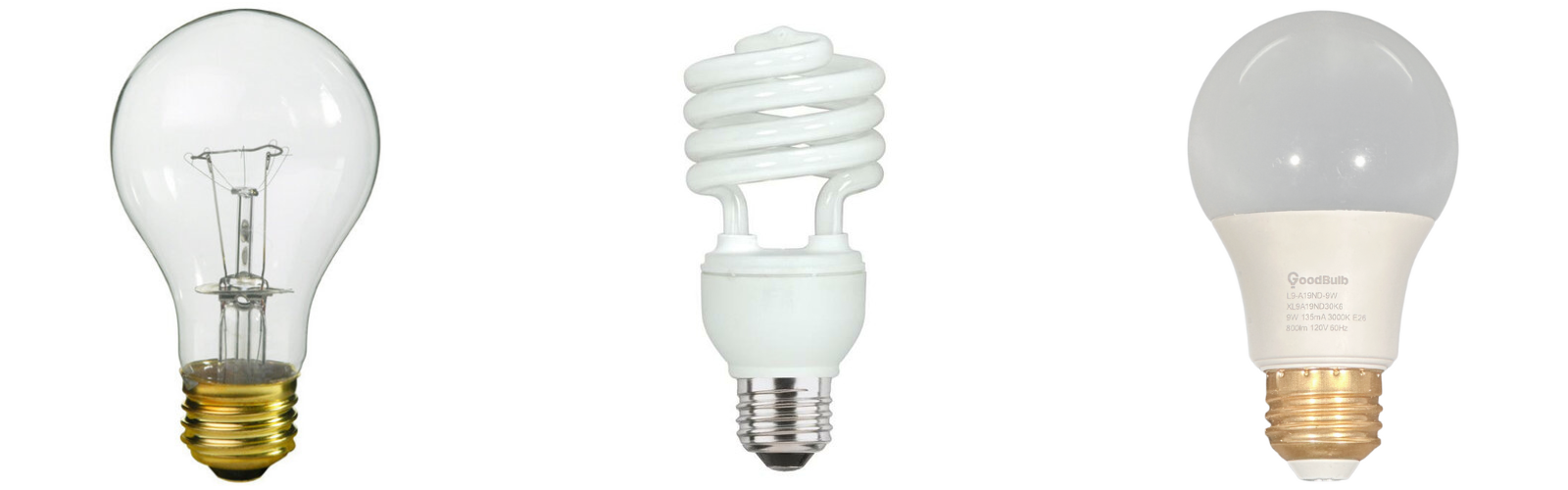
Comparing these two entities reveals a clear technological evolution. The incandescent bulb is a “resistive” technology, while the CFL is a “discharge” technology. This technical distinction explains why CFLs require a brief “warm-up” period of 30 seconds to 2 minutes to reach full brightness, whereas incandescents are immediate. However, the trade-off for that immediate light is a fragile filament that is prone to breaking from vibrations or power surges.
In terms of cost-to-benefit ratio, researchers at the Lighting Research Center found in a 2024 study that while an incandescent bulb costs roughly $1.00 and a CFL $3.00, the total cost of ownership (purchase plus electricity) is nearly 4 times higher for the incandescent over a 10,000-hour period. This data proves that the “cheaper” bulb is actually the most expensive choice in the long run.
Understanding the Technology and Safety of CFLs
To provide a comprehensive overview of CFLs, we must examine the internal components and safety protocols that distinguish them from other lighting types. Below are the technical and practical details regarding their operation and handling.
How Does the Integrated Electronic Ballast Work?
The integrated electronic ballast is the “brain” of the CFL bulb, located within the plastic base between the glass tube and the metal screw. Its primary function is to convert the 60Hz AC power from your home into a much higher frequency (usually 20kHz to 60kHz). This high-frequency operation eliminates the “flicker” often associated with older fluorescent lights and ensures a steady stream of electrons to keep the mercury vapor excited without overheating the bulb.
Why Is Phosphor Coating Essential for Visible Light?
Phosphor coating acts as the translator between invisible energy and visible light. When the mercury vapor inside the tube is hit by electricity, it emits Ultraviolet (UV) radiation, which is harmful and invisible to the human eye. The white powder (phosphor) on the inside of the glass absorbs this UV energy and instantly re-emits it as visible light through a process called fluorescence. By varying the chemical composition of the phosphor, manufacturers can create “Warm White” or “Cool Daylight” variations of CFLs.
What Should You Do If a CFL Bulb Breaks?
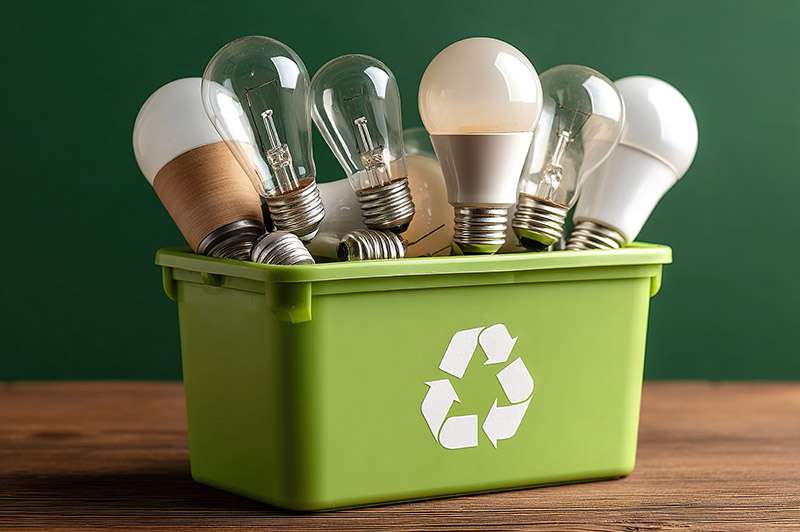
Because CFLs contain a trace amount of mercury (roughly 4 milligrams, or enough to fit on the tip of a ballpoint pen), safety is paramount during a breakage. If a bulb breaks, you should immediately ventilate the room by opening a window and have everyone leave for at least 10 minutes. Do not use a vacuum cleaner, as this can disperse mercury vapor; instead, use stiff paper or cardboard to scoop up fragments and use sticky tape to pick up small pieces, placing them in a sealed glass jar for hazardous waste disposal.
How Do CFLs Differ from Modern LED Technology?
While compact fluorescent light bulbs were the primary energy-saving choice for decades, Light Emitting Diodes (LEDs) represent the next generation of lighting. LEDs are even more efficient than CFLs, consuming about 50% less energy than a CFL and lasting up to 50,000 hours. Unlike CFLs, LEDs contain no mercury and reach full brightness instantly. However, CFLs remain a viable and often more affordable alternative for consumers who want to save energy without the higher upfront cost of some premium LED fixtures.
Source:
https://media.istockphoto.com/id/1250236380/photo/energy-saving-compact-fluorescent-light-bulb-isolated-on-white-background.jpg?s=612×612&w=0&k=20&c=MGXIlOlRhDndAKLvL_u9ZkDdRnls3LuBwkyUaUQP8ZE=
https://images.unsplash.com/photo-1493612276216-ee3925520721
https://cdn.shopify.com/s/files/1/0738/4046/0059/files/INCANDESCENT_cfl_led.png?v=1710025501
https://blog.lightbulbs-direct.com/wp-content/uploads/light-bulb-disposal-and-recycling.jpg
https://www.stouchlighting.com/hubfs/LED%20vs%20FL%20Blog%20featured%20IMage%20Size%202021%20May%201.webp
