
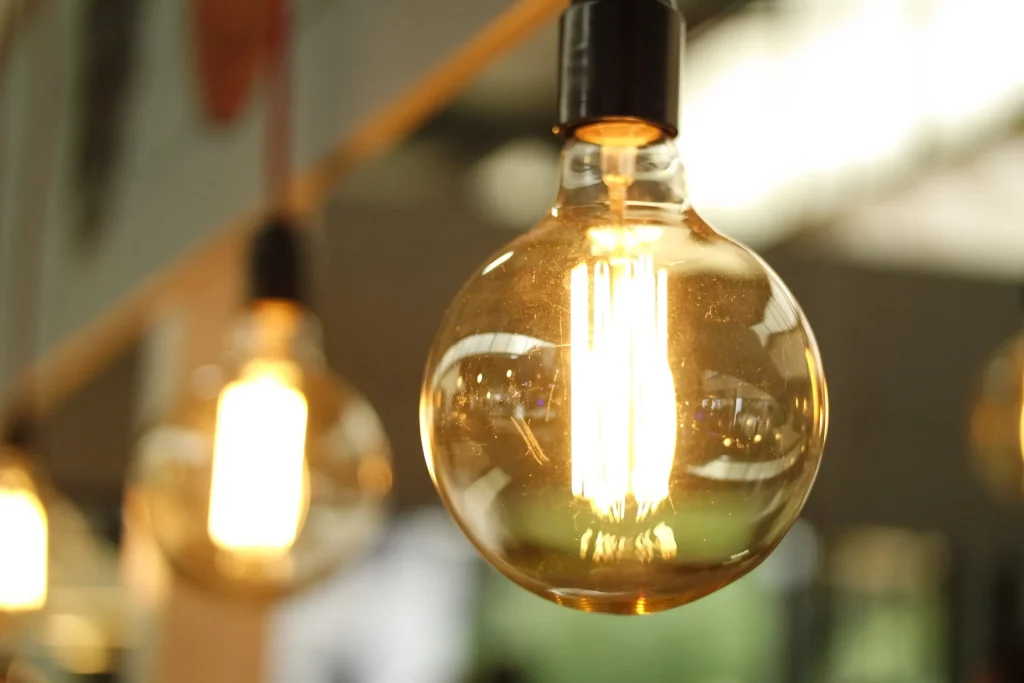
Incandescent light bulbs waste energy because most of the electricity they consume is converted into heat rather than visible light, making them inefficient and expensive to operate over time. This inefficiency directly explains why many households unknowingly pay higher electricity bills when using traditional bulbs. To understand this problem clearly, it is necessary to look at how incandescent light bulbs work and why their core technology leads to massive energy loss. By breaking down their structure and operating mechanism, the root cause of wasted energy becomes easier to grasp.
Beyond technical inefficiency, energy waste also translates into real financial consequences. Incandescent bulbs not only consume more electricity per hour, but they also generate excess heat that indirectly increases cooling costs in homes. To put everything into perspective, the article of NaturalLightLiving.com will also compare incandescent bulbs with modern lighting alternatives such as LEDs. Next, let’s begin by answering the most direct question users ask about incandescent bulbs and energy waste.
Do Incandescent Light Bulbs Waste Energy?
Yes, incandescent light bulbs waste energy because they convert most electricity into heat, consume higher wattage for the same brightness, and have outdated filament-based technology that is inherently inefficient.
To connect this issue clearly, understanding why they waste energy requires looking at the technology inside the bulb and how electricity is transformed once the light is switched on.
Specifically, incandescent bulbs rely on heating a tungsten filament until it glows. This process prioritizes heat generation over light production, which results in significant energy loss during normal operation.
According to research from the U.S. Department of Energy (DOE, 2022), traditional incandescent bulbs waste approximately 90% of their energy as heat, making them one of the least energy-efficient lighting options available.
What Makes Incandescent Light Bulbs So Inefficient?
Incandescent light bulbs are inefficient because their design relies on thermal radiation rather than direct light emission, causing electricity to be lost primarily as heat instead of usable illumination.
To understand this inefficiency more clearly, it is important to examine the internal components and physical processes involved in incandescent lighting.
.jpg)
How Does a Tungsten Filament Produce Light?
A tungsten filament produces light by heating up to extremely high temperatures when electric current passes through it, causing it to glow and emit visible light as a byproduct of heat.
More specifically, the filament’s resistance slows down electrons, generating thermal energy. As temperature increases, the filament emits light across a broad spectrum, most of which is invisible infrared radiation.
According to a study by the Massachusetts Institute of Technology (MIT Department of Physics, 2020), only a small fraction of thermal radiation from tungsten falls within the visible light spectrum.
Why Is Most Electricity Turned Into Heat Instead of Light?
Most electricity turns into heat because incandescent bulbs emit light through thermal radiation, a process that inherently produces far more heat than visible illumination.
In practical terms, this means energy is wasted every second the bulb is on. Unlike LEDs, which emit light through electroluminescence, incandescent bulbs cannot avoid heat loss due to physical limitations of the filament.
Research published by Stanford University (Energy Systems Lab, 2019) confirms that incandescent bulbs convert less than 5% of electrical energy into visible light.
How Much Energy Do Incandescent Bulbs Actually Waste?
Incandescent bulbs waste the majority of the energy they consume, with roughly nine-tenths of input electricity being lost as heat rather than converted into usable light.
To quantify this waste more clearly, energy loss can be examined through efficiency percentages and real-world power usage.
What Percentage of Energy Becomes Heat?
Approximately 90% of the energy used by incandescent bulbs becomes heat, leaving only a small portion for visible illumination.
This inefficiency is measurable through lumens per watt, a standard metric for lighting performance. Incandescent bulbs typically produce only 10–15 lumens per watt.
How Efficient Are Incandescent Bulbs Compared to Modern Standards?
Compared to modern standards, incandescent bulbs are drastically inefficient, producing far fewer lumens per watt than LEDs or CFLs.
For example, LEDs commonly achieve 80–100 lumens per watt, meaning they deliver the same brightness using a fraction of the electricity.
According to the International Energy Agency (IEA, 2021), switching from incandescent bulbs to LEDs can reduce lighting energy consumption by up to 85%.
Why Does Energy Waste Increase Your Electricity Bills?
Energy waste increases electricity bills because incandescent bulbs require more power to produce the same brightness and generate excess heat that indirectly raises cooling costs.
To see how this happens, it is necessary to link wattage consumption with real household energy usage.
How Do Incandescent Bulbs Use More Power for the Same Brightness?
Incandescent bulbs use more power because higher wattage is required to compensate for low light output efficiency.
For instance, a 60-watt incandescent bulb produces similar brightness to a 9-watt LED bulb. This difference multiplies energy costs over time.
How Does Excess Heat Increase Cooling Costs in Homes?
Excess heat from incandescent bulbs raises indoor temperatures, forcing air conditioning systems to work harder, especially during warm seasons.
A study from the University of California Energy Institute (2020) found that inefficient lighting contributes measurably to residential cooling loads in summer months.
Are Incandescent Bulbs More Expensive Over Time?
Yes, incandescent bulbs are more expensive over time due to higher energy consumption, frequent replacements, and increased cooling-related energy costs.
To understand total cost, it is important to evaluate both operational and replacement expenses together.
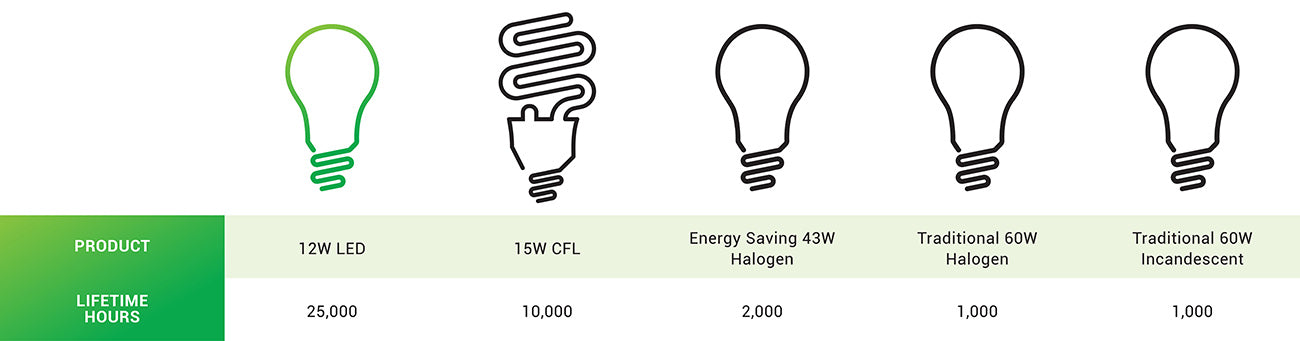
How Does Short Lifespan Increase Replacement Costs?
Incandescent bulbs typically last around 1,000 hours, requiring frequent replacement compared to LEDs that last 20,000 hours or more.
Frequent replacements increase not only purchase costs but also maintenance effort over time.
What Is the True Lifetime Cost of an Incandescent Bulb?
The true lifetime cost includes electricity usage plus replacement costs, making incandescent bulbs significantly more expensive despite lower upfront prices.
According to the U.S. Department of Energy (2022), households can save hundreds of dollars over a decade by switching from incandescent bulbs to LEDs.
How Do Incandescent Bulbs Compare to LEDs in Energy Use and Cost?
Incandescent bulbs lose in energy efficiency, LEDs win in lifetime cost savings, and modern lighting technologies clearly outperform traditional bulbs across all major metrics.
To finalize this comparison, energy use and long-term expenses must be examined side by side.

Energy Efficiency Comparison
LEDs produce significantly more light per watt, reducing electricity usage without sacrificing brightness.
This efficiency advantage allows LEDs to deliver consistent illumination with minimal energy waste.
Lifetime Cost Comparison
Over their lifespan, LEDs cost far less due to reduced energy consumption and infrequent replacement.
A comparative study by Harvard University’s Energy Policy Group (2021) showed that LEDs cost up to 80% less than incandescent bulbs over 10 years of use.
In summary, incandescent light bulbs waste energy due to outdated thermal technology, resulting in higher electricity bills and long-term costs. By understanding how and why this happens, consumers can make informed decisions and transition toward more efficient lighting solutions.
Source:
- https://encrypted-tbn0.gstatic.com/images?q=tbn:ANd9GcRf7g_MTvXoVPNurNMvlWv8dWHq_sqHnignlw&s
- https://www.azom.com/images/Article_Images/ImageForArticle_1538(1).jpg
- https://encrypted-tbn0.gstatic.com/images?q=tbn:ANd9GcT83SEKx-SJYRHeG2SVsBvkfF7m51Ww14Uj3Q&s
- https://encrypted-tbn0.gstatic.com/images?q=tbn:ANd9GcQG35Z8pOgdMYg3Iq1t65E-4sNBPdQr_5OCRw&s
- https://cdn.shopify.com/s/files/1/0011/5517/0351/articles/Sunco_Marketplaces_Web_Blog_Lightbulb_longevity_2.jpg?v=1593013420
- https://cdn.shopify.com/s/files/1/0694/5151/4161/files/LED-CLF-Incandescent_1024x1024.jpg?v=1674109767
- https://www.popsci.com/wp-content/uploads/2022/05/05/pexels-burak-kebapci-45072-scaled.jpg?quality=85
